

Questions this work can help answer.
- What should the brand look and feel like to support the intended positioning?
- Which visual assets can become distinctive and recognizable over time?
- How much expression should come from the logo versus the broader system?
- Which touchpoints matter most at launch?
- How should the design work across practical constraints, vendors, and channels?
- What design decisions should become reusable rules rather than one-off assets?
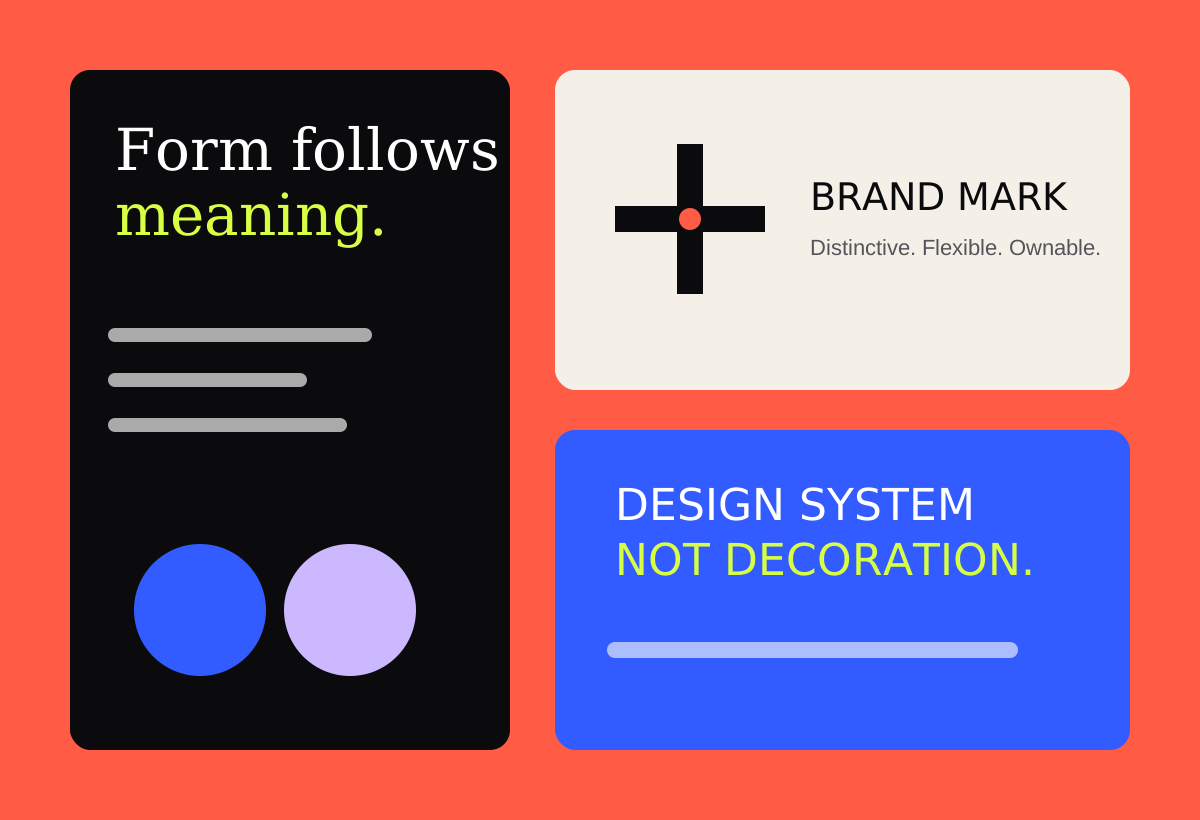
Typical workstreams.
Creative territories
Develop distinct visual directions tied to agreed strategic principles and evaluate them against clear criteria.
Identity design
Refine the selected direction into a coherent mark, color, typography, graphic, image, and layout system.
Core applications
Design priority touchpoints that demonstrate how the system behaves in real use.
Systemization
Convert creative decisions into templates, guidelines, files, and reusable rules.
Potential deliverables.
The exact output depends on scope, available information, timeline, and the decisions the organization needs to make.
Common questions.
Sometimes. If the organization already has sufficiently clear, agreed strategy, the project can begin from that foundation. If not, a short positioning or brand-audit phase may reduce subjective design decisions.
The goal is usually to create a system and priority applications that enable future production, not to make the organization dependent on bespoke design for every piece.
Final deliverables and rights depend on project scope and any third-party fonts, stock images, software, templates, or commissioned materials used in the final system.